

Keeping Connected

Photos show two earlier ways I stayed connected with family and friends. Some kids now don’t know how to use a rotary phone, and they learned the position of keys on a computer instead of a typewriter. Years ago in Mississippi when the parsonage had a party-line connection, it was a rotary phone. And we couldn’t take the phone with us when we left the house. Now we have access to people via cell phones in our pockets. Getting in touch with someone can be easy. I’m now typing on my computer and get to style this message as I see it on the screen. I don’t have to shift to the next line; it’s done automatically with my settings. Corrections are easier also.

As you can tell I grew up with these ancient tools for the purpose of communication. Now, even though it’s easier, it’s often less frequent and messages are quickly sent and replied. The postal carrier has fewer hand-written or typed letters to deliver, because I’m getting in touch with people in more modern ways.

With all this at my fingertips, I still want to stay connected with family and friends. That’s why I named my blog “Connections” (www.abcoker.blog). It’s that important to me. It’s why I write posts on my blog and collect email subscribers and put a new post on my Facebook page. I want people to read what I write, and I want responses so I can know what’s happening in their lives. This is the age I’m living in, and it’s good.

Recently, in an attempt to get more listeners to Bill’s podcast, Words of Endearment with Bill Coker, I decided on extra promotion methods. I didn’t know it would be fun. First, I had help from a fellow writer who knows her way around podcast tools. In answer to my question, she instructed me and then encouraged me when I applied one method. It meant copy and paste, a favorite I’ve used in other ways. After I wrote about a new episode of Bill’s podcast, I copied it to my Facebook page and added the link with the icon.

Next I used my email server, Kit, wrote a broadcast, and attached the link and icon. Easy. Kit emailed this to my subscribers. What happened next was the fun part. I first heard from a former member of a church Bill pastored while he was in graduate school. She was 17 years old when we were there, and the Lord saved her after one of Bill’s sermons. She took the time to contact me and it was sheer joy. The next email came from our nephew in Louisiana. Then I received an email from a graduate of Asbury College who had gone with “Dr. Coker” to Israel with other students. When she listened to the podcast episode, she noticed the music score at the beginning and end: “And Can It Be?” Her memory connected with how they sang that Charles Wesley hymn each evening as they got ready for bed.

I’ve also received brief emails from folks, letting me know they are ready to listen to the podcast. This simple promotion has connected me with people from our past, as well as those with whom I’m currently in touch. Sometimes I have to ask for a bit more information to connect with past friends, for it’s been a while since we’ve written.

All is good! God is good! All the time! I thank God for keeping me connected in this now age.
Creator and Creations

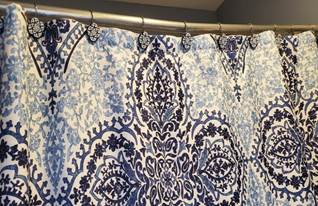
Eight years ago Becky bought that shower curtain for my bathroom. I like it still and haven’t grown tired of it. Shades of blue on a white background. The design is of flowers, various styles. The dark and light shades of blue match the bathroom walls and rugs. When I stare at the curtain, I never ask if it were created by a machine, although mechanics contributed to its mass production. I do wonder about the person who designed it. How did she or he come up with the design repeated throughout the whole?

With all the hype about AI, I think of its meaning and impact. It’s artificial, and AI permits us to depend on something other than our own intellect. Although I’m speaking without research, I assume there is someone’s (or several someones’) intellect behind the program. But I don’t personally like its intrusion into my creative life. When I write I want it to be my work, my thoughts and words coming together to make a point. I know that what I produce can’t compare to the refined skills of other writers, but it’s the best I can do. However, I improve my craft by reading and learning from others.

When I think of creation, I first remember and give honor to the Creator––God, the mastermind of all that’s been made––for His glory and our pleasure. Just think of how the elements of earth combine to make this the correct environment to sustain life. Look at the photo above on the right: a human and an animal, that little girl and the pinguin who makes her giggle. On earth they and we have the right chemical combination to form oxygen for breathing, and we even have the force of gravity to keep us upright. God designed it all for our good.

Where does that leave my thoughts? I first praise God, the Creator of the universe and all that’s in it. Then I give thanks for all those who use their God-given creativity to design and produce something as practical as a shower curtain. Each of us is a little creator, given the joy and privilege of cooperating with God in His creation.

Value of Routine

While looking for a devotion I thought I’d written about routine, that search led me to the internet where I saw “18 Reasons Why a Daily Routine Is So Important” by Skilled on Life. While these are good, they didn’t provide the main reason for this blog post.

I make a connection here about how routine, while valuable, met with resistance when caring for Bill with dementia. He would often say, “This is the way I do it.” But it was not! Examples included wanting to wear an undershirt under his nightshirt and confusion about the time to get ready for bed (Sundowners Syndrome). I am devoted to routine, and yet it was the main thing I needed to “let go” when dealing with dementia.

Applying some of those reasons for routine, I’ll show how I prefer them and how a dementia patient might resist. I’ll not go through the whole 18 reasons, but here are a few.

“Reduce our need to plan” is one that suits me, because it’s good to know ahead of time what’s expected for the day. Often during caregiving, we used the expression “new every day.” We could not predict what one day would be, based on a previous day.

Routine “creates structure in our lives,” and that’s certainly true. But structure is out the window when dementia arrives. Each day is different, and there’s no concrete structure. It wasn’t easy to adjust, because I expected what was not to be our present situation.

Two combined: routine “instills good habits” and “breaks bad habits.” Bad habits overtook the good ones, those that the dementia person preferred in his former days. That included issues of cleanliness (not wanting to shower) and incontinence (even what’s worn to stay dry). I faced resistance not only from Bill but from myself.

“Helps reduce stress” sounds like a good goal, but that didn’t work well with my attitude toward dementia. Every day was stress-related, and a routine couldn’t help. It was the need for me to accept what came along and learn to be kind in word and deed. That’s where my relationship with God came in. I quote a prayer found on YouVersion:

“God, You reign above all! You are above all things and you hold all things together. Your name is holy, and Your words bring life and healing. You make known to me the paths that lead to life! All glory, honor, power, and praise belong to You alone! In Jesus’ name. Amen.”

P.S. If you’re interested in knowing more about all 18 reasons for the value of routine, go online for Skilled on Life. I list them here, but they are expanded on the website.

  1. Makes Us More Efficient
  2. Reduces Our Need to Plan
  3. Creates Structure in Our Lives
  4. Saves Time, Our Most Valuable Resource
  5. Instills Good Habits
  6. Breaks Bad Habits
  7. Helps Us Become More Proficient
  8. Helps Us Get the Most Important Tasks Done
  9. Prioritization
  10. Reduces the Need for Determination and Willpower
  11. Reduces Procrastination
  12. Builds Momentum
  13. Builds Self-Confidence
  14. Saves Us Money
  15. Helps Reduce Stress and Facilitate Relaxation
  16. Frees Up Our Time
  17. Helps Us Achieve Our Goals
  18. Keeping Track of Our Success

I’m Ready; Now Wait

Things get rusty with time and moisture.

Hugging my knees, I sat on the front steps of our house built on twelve acres. Red cedar banisters framed the concrete and brick porch. Fresh mulch, wet by an early shower, darkened the newly turned soil. The flower bed between two maple trees was readied, and I awaited a gift of hostas from my friend’s garden. We would plant one more page in our dream home.

When something is ready, what usually follows is a time of waiting. For me, that’s the difficult part. As with my writing, when one piece or manuscript is ready, I want to move on. As with my memoir about caregiving, I’ve written and am satisfied it’s finished. But the work toward publication adds to the process. I’m sending submissions to literary agents, for once again I’d like to try and secure traditional publishing. Memoir is not easy for that route, unless the author is famous. Definitely not me. I think my memoir is unique in its honest approach of how I tended to caring for Bill during his dementia. How do I convince someone it’s worth publishing and it will attract an audience beyond my friends?

So I wait to hear back from agents if they want to pursue a publisher for my memoir. The agent first has to be convinced in order to convince a publisher. One drawback of waiting is that things get rusty, but they also need moisture. In my case, it’s how I use the waiting time. I could add sweat and tears, but that would not get me an answer. How vulnerable should I be in presenting my case for publication? I definitely don’t have the name, and my platform needs work, but I’m more filled with self-doubt over the craft of writing. Is it truly worthy of publication for a wider readership? Will it sell? That’s what an agent and a publisher are looking for. It amounts to their educated and reliable consideration. If it doesn’t meet approval, I will again go the route of self-publishing. This time I might even try it myself instead of my favorite hybrid publisher. I have to consider the $ cost.

While waiting upon a response from the right agent, I can work on my next projects: Bill’s book on holiness and articles already started for magazines. Waiting can be rewarding if I put my mind and effort into it. A good reward is what’s waiting in this business of publication.

P.S. If you are an interested buyer for An Honest Caregiver when published, please send me your email address.  al2.coker@gmail.com  Thanks.

Meanderings from Bill’s Journal

In celebration of Bill’s June birthday, I collected meanderings from his journal.

A June entry: I am reminded again of the value of habit, the benefit of ritual. My taking time to journal my thoughts is soon forgotten when I allow periods of time to break routine. I have discovered that habit can be a strong negative when it feeds our inordinate desires; but it is a strengthening positive when it establishes a soul-building practice.

This morning I only touch base as I must be off early to meet with a church member for prayer. It’s an intrusion into my personal routine, but a good opportunity to get another interested in a consistent prayer life.

A few days later: The psalmist’s words speak to me again: “The Lord is my chosen portion and my cup; You hold my lot. The lines have fallen to me in pleasant places; indeed, I have a beautiful inheritance” (Psalm 16:5-6). How wonderfully true! I can also say with him: “You have made known to me the path of life; in Your presence is fullness of joy; at Your right hand are pleasures forevermore” (Psalm 16:11).

May God forgive me when I grieved over losses rather than rejoice that He is always at work in every situation for good. He never abandons us to circumstances––life’s dark valleys or those who stand against us. Somehow my preaching must always bring this joyous truth to those who are hearing. I remember Dr. Robertson’s words in his class on preaching: “Always end sermons with the good news. This is Gospel preaching.”

Messy Galaxy

A week later: I think there is unity in creation and that is to be seen in all He has made. I know that most of us live quite superficially. The psalmist seems more tuned in when he says, “When I consider the heavens, the moon and the stars which Your hands have made, what is man that You are mindful of him?” (Psalm 8:3-4). I think the scientist is far more informed about the elements in creation and less aware of their witness to the Creator.

The idea of “centering” takes on greater meaning and significance as I understand more what it is to pray and what it is o develop spiritually and be truly sanctified. The clean heart is not just purified; it is unified, no longer a “heart and a heart,” but whole and in union with God and reality.

~Dr. William B. Coker, Sr.

Home Alone

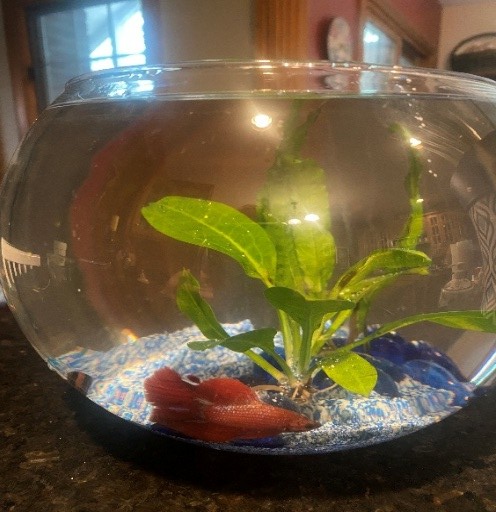
I ‘ve been home alone this week if you don’t count the fish and dog. But I can’t discount them, for I need to feed the fish, Fire, and the dog, Jules, who also keeps me busy letting her out and back in. She’s definitely not an outside dog. Okay, I just took a quick break and fed them both.

      Fire and Jules                                              

 Becky, my daughter, and her husband, Paul, were away for a week working at the church’s youth camp. Becky is head chef and Paul had responsibilities with teaching and supervising. They were only gone for seven days, but it afforded me time to think about being a widow. Since my husband died in March of 2024, I’ve not really been alone. I live with Becky and Paul, and while I may not see them all day every day, we connect in the evenings.

Becky cooks our supper meals, and Paul is the resident handyman. Now it’s a change of routine for me. For this week, I shopped for easy-prep meals, including seafood. I have eaten well, and not gone out for meals. As far as anything needing“ fixing,” nothing has broken. But I put a new battery in the dining room clock and will take the trash bin to the curb tonight.

What this time alone has taught me is empathy for widows––my sisters and friends. Most of them live alone. Some have family nearby; a few are in assisted living facilities; while others are active in their churches. For example, my sister in Alabama is in an assisted living facility due to her needs; and my sister in New Mexico keeps busy by contacting members of her church who have special prayer concerns. Both have family nearby. We all know that God is with us. His provision, protection, and presence are real on a daily basis.

Living in the same home with family, I have not experienced being alone. This week I have had to keep focused on what’s important. I’ve succumbed to distractions such as watching a stand-up comedian on my phone. He’s clean and I appreciate his humor, but watching endlessly can be a waste of time, a big obstacle, along with the energy it takes to get back on track.

This week has not been a waste of time, for I’ve learned about myself and others. I’m blessed, for God is with me. I’m thankful, for He’s my constant companion in rough and good times.


Our Daughter’s Perspective

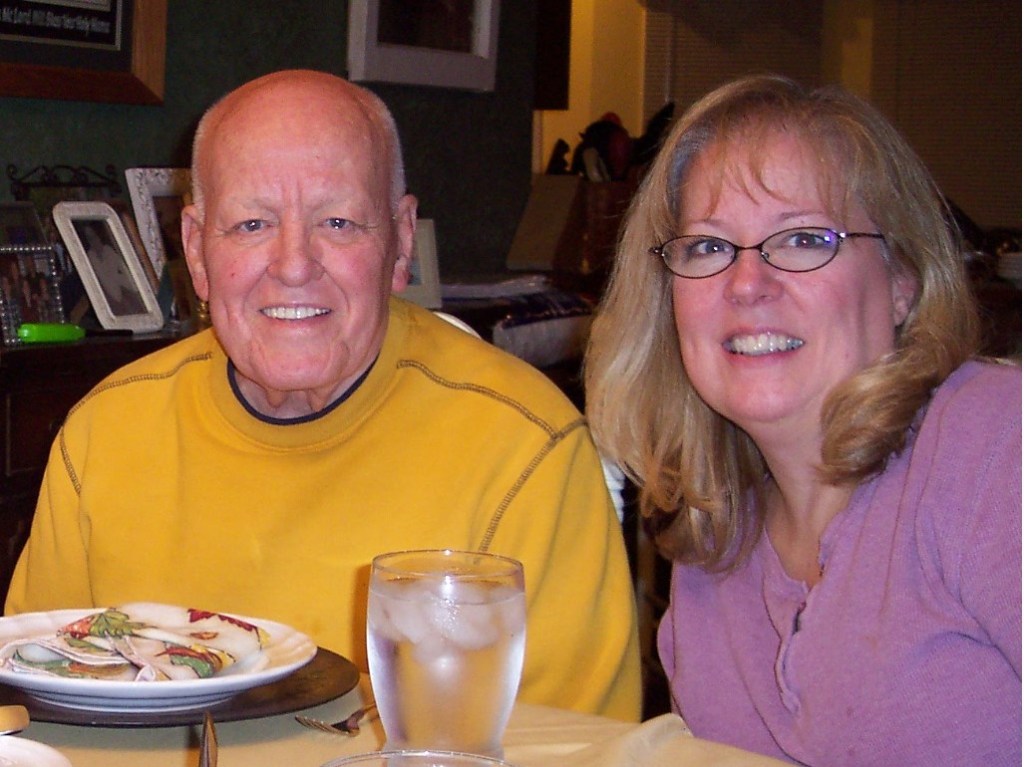
Photo taken before moving to Indianapolis. Written by Becky in June of 2023.

My mother phoned, stating she and Dad decided to move to Indianapolis and wanted to purchase a house with my husband, Paul, and me. For two years we had discussed different options, knowing my mom would need help caring for my dad. Suddenly we put preparations in motion, including the sale of both of our houses. The search began and we found a home here that would meet our needs.

No one can fully prepare you for all the nuances of caring for a loved one with dementia or Alzheimer’s disease. We read several books to understand the disease process and to know better what to expect. Several well-meaning people told me we would not be able to keep my dad in our home for the entire process. We determined to try to keep Dad at home with us. Everyone’s circumstances are different, and this isn’t always possible.

Although we experienced difficult times––watching my dad slowly slip away into the recesses of his mind––we could give thanks for much. I am thankful for the home we found that provided a secure place for my dad and where everyone had space of their own. I am thankful my dad remained happy most of the time, and he never became so violent we could not care for him in our home. I am thankful for the support of my husband, and of my brothers who made it a priority to help, including staying at the house when Paul and I traveled. I’m thankful for friends and family who prayed for us, advised us, loved on us, and took this journey alongside us.

Jay Allen wrote the song, Blank Stares, about his mother going through early-onset Alzheimer’s disease. With his permission, I quote some of the lyrics:

“It’s getting harder and harder to watch you disappear

Oh if only farther leaving me in tears

If I could only seal the cracks you’re slipping through

Wish I didn’t feel so helpless when it comes to helping you

Hold on

But I keep holding on

Every little memory made of you and me

Every little glimpse of who you used to be

I know you’re still in there

Deep down somewhere I swear I still see you

I still see you

Between the blank stares”

Dementia is a long, slow, and difficult process of dying. My dad used to say that growing old is not for sissies. Caring for a loved one with dementia isn’t for sissies either. Hold on to Jesus! ~ by Rebecca Anne Coker Gearhart, RN

This will be included as the foreword in my upcoming book on caregiving.

It’s Out There

What’s out where? My Memoir’s book proposal has been emailed to an agent. Now to do research for other agents and publishers. Here is part of the Introduction to Memoir from an Honest Caregiver. Are you interested in knowing when it’s published?

Introduction

One weekday morning Bill walked into the kitchen wearing only his jockey shorts and T-shirt. This surprising scene happened two years after moving to Indianapolis and buying a house together with our daughter and her husband, Becky and Paul Gearhart. Bill held two pairs of socks in his hands and asked which ones he should wear―black or white. My immediate reaction was due to fear, for our houseguest might find my husband in his underwear. I told Bill it didn’t matter; he could decide which socks he wanted. This didn’t solve his dilemma, for he could not choose.

This episode illustrates how Alzheimer’s disease affected my husband and how I reacted on the spot. You’ll read about our journey and view the stages of dementia caregivers experience. To our family and friends, be warned. You will see Bill as different, radically changed, not how you knew him (or me).

I introduce you to my husband before dementia began to control our lives. Bill grew up in New Orleans, Louisiana, the third of four children by a Mississippi-born couple holding modest jobs. His father worked in the railroad yard and his mother held a filing job in the basement of Charity Hospital. In spite of the family’s meager income, all three sons graduated from college.

Bill stayed home to attend Tulane University, earning a BA degree with a major in philosophy and a minor in English. He graduated in 1957, also the year we got married in Mobile, Alabama, after I graduated from Murphy High School.

Four years prior, Bill, as a senior in high school, distinctly heard God’s call to preach. Upon graduation from Tulane, Bill’s Uncle Bud, a Methodist pastor, helped him secure an appointment as a supply pastor for a small church in North Biloxi, Mississippi.

I sum up Bill’s further educational history. He received a BD and ThM from Asbury Theological Seminary, Wilmore, Kentucky, in 1963 and 1965. Then at Hebrew Union College in Cincinnati, Ohio, he earned a PhD in 1973, with a major in Hebrew Linguistics. For two years Bill taught at Asbury Theological Seminary and moved to Asbury College (University) as professor of Bible and Greek until 1989 when he accepted a pastorate in Terre Haute, Indiana, at World Gospel Church (WGC).

With this background, you can compare Bill as professor and pastor with what he later became. After 19 years as pastor of WGC, Bill retired in 2008. In July of 2010 he spent 24 days in the hospital with Legionnaire’s disease. Dementia set in soon after.

While you view various stages Bill traveled through, you are also in my head as I learned about myself. This is my story––how I connected with and cared for my husband. If you are now a caregiver for a loved one or soon to see that as your role, our journeys may relate.

For me, his caregiver, the basic loss became Bill as he used to be, for my expectations from him no longer held reality. Add my independence and control, along with loss of connections with family and friends.

Every good skit, play, story, or book needs a beginning, middle, and ending. It began after Bill’s hospital stay with Legionnaire’s disease. Writing in my journals about the messy middle of five years, I did not know how or when this memoir would close. The process of the ending was brief. The end came on the seventh of March 2024 when Bill, after two weeks of in-home hospice care, breathed his last. A new chapter began with my grief journey, but I’ve know God’s peace.

Not Once but Twice

Bill came home in the middle of the day as I was ironing in the dining room. He said, “I quit.” Startled, I asked for details. He was an adjunct professor at Asbury Theological Seminary, and we were living in seminary housing. He had asked the president for a short leave of absence in order to complete the dissertation for his PhD at Hebrew Union College. With the request denied, Bill said he could not continue teaching.

I’m not sure now how much of the school year was yet to complete, but my concern was loss of not only an income but position in the school and community. Wilmore, Kentucky, was the town of two prominent schools: seminary and college. Somehow the news traveled across the street to Asbury College, and not long afterward the president there asked Bill to come for an interview, and he was later hired.

In the meantime, I had doubts and questions about what would be next. Our four children needed a father with a substantial job. That night, as usual, we knelt on either side of our bed and prayed. I don’t recall what Bill said, but it made me feel calm and confident God would provide. I knew Bill was capable of teaching, but he also needed to finish that dissertation. As I said, Asbury College’s president hired Bill and also gave him the first quarter off (with pay) to work on his dissertation. During that time it became evident that the subject matter was not suitable, for the assigned translation had several languages not in Bill’s knowledge. A trip to Cincinnati to confer with his major professor meant a change in topic and a later proposed trip to Israel.

While the dissertation did not get completed before the next quarter’s teaching load, Bill had broken its back, so to speak. The new job at the college meant another house for us, a consistent salary, and a productive program of teaching for Bill. Before long Bill earned his PhD and became a full professor. Our whole family gained lasting friendships, and I also earned my BA at the college.

But this “quitting a job” happened again. After some changes at the college, Bill accepted a position at OMS mission agency in Greenwood, Indiana, and we moved there. Two years later, after a board meeting, Bill arrived home to announce that he resigned. Now what? The decision was reasonable, for his staff position required that he should have had field experience. He did not, and felt it illegal to continue. A seminary in Oregon offered him a position, but he turned it down. Then the unexpected: Asbury College called to request he return as academic dean. This he accepted, and we moved back to Wilmore.

This would not be the end of moves for our family, but it did confirm God’s provision and protection during changes in salary and location. We trust God, for He is good all the time.

Bill Courted Ann

In answer to my survey, a friend asked about our courtship. Enjoy.

It all began in New Orleans where Bill and I belonged to the same church. Bill never liked me to tell this story, for he thought it made him look like he robbed the cradle. Bill was the song leader for youth church, and he led the songs for Sunday evening service. He also played a stringed washtub in a jut band that often performed for youth group. Everyone loved Billy (how he was known then), especially my parents, the reason they allowed me to date him. He rode the bus and then walked a mile to my home before we went to the local movie theater.

Billy often came over on Saturdays to hung out. Once he hid my dad’s false teeth and replaced them in his soaking dish with a tiny toy set. (Dad did find his set in the morning.) Mother adored Billy and she prayed we would one day marry. At the time I was a high school freshman and Billy was a freshman at Tulane University.

We broke up before my family moved back to Mobile, Alabama. Billy’s reason didn’t make sense, but his mother believed he shouldn’t date anyone he didn’t intend to marry.

I chose Latin for my language credit in high school. That led to writing Billy with questions, for he studied Latin in college. During my senior year Billy came to Mobile with the Tulane band. From the hotel downtown, Billy phoned my house. At first I thought it was the boy I wanted to date. With that settled, my dad drove to the hotel and brought him to our house.

We had a fun evening, and I was intent on getting Billy’s attention, proving something, I guess. For my English lit class, I had to give Lady Macbeth’s soliloquy. So I rehearsed it to impress Billy.

The next day at school we had an assembly with the Tulane band performing. I sat in the balcony and bragged to my girlfriends that I knew the sousaphone player. Afterward, I went to the stage, for my mother had told me to kiss Billy goodbye––on the cheek.

Our correspondence became more regular and enjoyable. When time for my graduation, I invited Billy to attend and bring my girlfriend from New Orleans. Billy and Nancy arrived and stayed at our house. After my graduation, we went to the prom and then swimming in the bay. At home Billy and I stayed up to talk.

About mid-summer, Billy came with an engagement ring. I held it up to the window, and he said, “The diamond is real.” We went to tell my mother, and later after supper, Billy asked my dad if he could marry me. Dad asked, “What about her scholarship to college?” I remember Billy’s answer: “I’m not marrying a college degree, I’m marrying Ann.” We set a date for August 24th, and my mother’s disappointment was not having enough time for engraved invitations. Billy visited me several times before our wedding at my church in Mobile. His Uncle Bud, a United Methodist pastor, officiated, and the Coker family came from New Orleans.

Bill had started pastoring a small church in North Biloxi, Mississippi, so he had income and a parsonage. That’s where we spent our honeymoon, and I’ve never regretted it. That first Sunday morning I heard Bill preach and that night we had quarterly conference at church with the district superintendent presiding. We started off our marriage serving the church and each other.

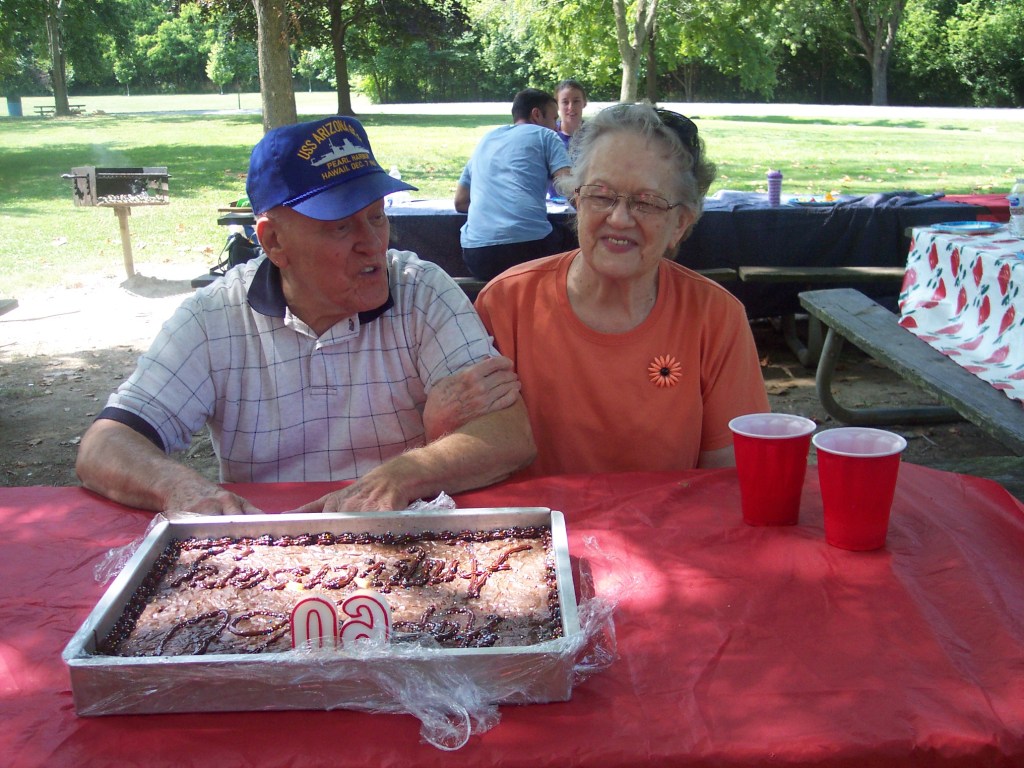
Celebrating our 60th wedding anniversary: family picnic in Indianapolis.