Opportunity

Today Bill went with me as I had several errands to run. He patiently waited while I got my hair cut. Later as I shopped for a casual top at Walmart, he followed me around the numerous display racks and shelves. No complaints. In an unfamiliar route he helps me look for street names and checks to see if cars are coming when we’re getting out of a parking space or waiting at a stop sign. I also look, for his right eye doesn’t have good vision.

We ate lunch at Chicago’s Pizza and Bill especially liked the sweet slice on the buffet. This stop was his favorite of all our errands. He likes to eat, paying attention to the clock, telling me it’s past 12 noon and we could have lunch. I think his eating is only to keep from being bored.

At the bank he stayed in the car while I cashed a check. Somehow the subject of marriage came up and the teller asked me how long we’d been married. When I said 62 years next month, she replied that I must have found a good man. I agreed. Then she asked me to tell another teller, a newlywed, what our secret is. I told them, “It’s commitment – to the Lord and to each other.” When I got back to the car I relayed the conversation to Bill, emphasizing the part about his being a good man, a keeper. I wish I had told the girls at the bank that Bill was in the car, that he now has Alzheimer’s disease, and that while we’ve changed, our commitment has not changed. It’s new every day.

Recuperating 003

This is Bill in August of 2010 when he got out of the hospital after a bout with Legionnaire’s Disease. He was always cold then. He’s cold now & turns on a space heater under his desk. That’s why I reached for this photo.

Journaling

Books.tied

Journaling continues to be a good thing for me – a creative exercise, a way to express myself and reflect on what I’ve read, done or thought.

To whom I’m writing is still up for grabs. Sometimes my entries are prayers or close to that, and at times I sense I’m writing to another person who may read these in the future. More often than not, I’m writing for my own self, for my benefit. Putting it down on paper helps me sort out my thoughts, evaluate my actions and attitudes, and give the subject a chance to expand and connect.

Connections are a big part of what I write, especially as I connect two or more passages of Scripture or as I connect my life with God and His Word. Through my journaling I seek to connect my words with God’s Word.

I find in journaling a means of expressing – of relating to myself and of talking to God, of connecting Scripture with life situations, bringing the past and present together and even speaking to the future. I can express myself better on paper than speaking. Maybe it’s because writing is a slower medium and it gives me time to think.

As I write I reflect and set patterns, make decisions, and see how my faith works. It’s an expression of love and hope, but also of fear and doubt. I can be honest on a blank page, and I can be a positive influence even on myself. Journaling brings my life into proper focus.

Samples of what I’ve written as I’ve started new journals:

I begin a new journal, a fresh page, yet continue reading some of the same books.

I want in this last half of the year to be more loving and more hopeful – toward myself and others.

Today seems topsy-turvy, getting to my readings late. Unless I am changed, my experience is of no value. I must bear the mark of the disposition of Christ – following the example of servanthood. I am to be His epistle, not just say or teach His Word.

Grandkids gave me a beautifully bound journal, and I’m tempted to put it aside. But this is the year for my 80th birthday, so I decide to use it. Someday I’ll be happy I did.

In Whose Image?

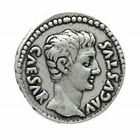
denarius coindenarius

When the Pharisees asked Jesus if they should pay tax to Caesar, Jesus had them look at a coin: “Whose image is this?” (Matt. 22:20, NIV). Dutifully they answered that Caesar’s image was imprinted on the denarius. So, yes, he gets the imperial tax. “Give back to Caesar what is Caesar’s, and to God what is God’s” (v. 21). We generally stop at the first half of that verse for proof that paying taxes is right, expected of us. After all, the emperor’s image is on the coin.

Jesus’ answer was twofold. So what bears the image of God? What belongs to God? It’s who. We go back to the creation story. Of all the creatures God made, only the humans did God create in His image: “In the image of God he created them; male and female he created them” (Gen. 2:27, NIV).

This is basic to the pro-life message. Because we are created in God’s image, we do not abort unborn human children. God spoke through Isaiah about “children, the work of my hands” (Isa. 29:23, NIV). From the moment of conception, we are all stamped with the image of God. Life matters. We are precious in God’s sight, for He created us and we belong to Him. We defend the rights of the unborn, because we speak the truth of ownership, the right to live in His world.

The message of bearing the image of God goes further; because we belong to God, we make ourselves available to Him, His plans and purposes. In a way, we accept that image upon ourselves, into our daily living, honoring God and proclaiming His Word to others. We want the truth to be known in our family, neighborhood, nation, and around the world. We live out the image of God. We cannot say to the One who formed us, “You did not make me” (Isa. 29:16, NIV). God did. Therefore, we represent Him in all we say and do. That’s image-bearing.

DHS Class of 1959

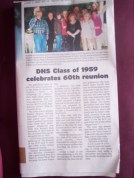
The graduating class of 1959, D’Iberville High School, Mississippi, met for their sixtieth reunion. For this group of former students, it’s not unusual to get together and renew friendships. Ten classmates met in the home of Cynthia Lewis to celebrate their high school graduation of May 15, 1959. Members brought typical southern dishes to share: gumbo, po-boys, and brisket, also cookies decorated with the school’s logo. The centerpiece featured a large cake with the school colors of maroon and gold and a photo of the class’s fiftieth reunion.

DHS.60Reunion.2019  Not a good photo but it does the trick.

The Biloxi-D’Iberville Press gave prominence to the reunion with a write-up and photo, naming the ten 1959 graduates who met: Jerald Levins, Jimmy Rodriguez, Marlene Pickard, Shirley Richard, Charlotte Parker, Tim Greenwell, Cynthia Lewis, Janette Williams, and Orey Lee & Janet Krohn, including maiden names for the ladies.

Included in the write-up is our connection to this class: “Always a topic of any class gathering is the senior trip taken to Monterrey, Mexico, by the class just before graduation. The class raised about $2,500 that year by selling peanuts and magazines to pay for themselves and their four sponsors, Rev. Bill Coker and his wife, Ann, along with Coach Billy Salter and his new bride, Elaine. The seven-day trip by Grey Line Tours for the 23 seniors and sponsors, including meals and hotels, was by today’s standards, certainly to be considered a bargain. But then again ‘it was the 50’s.’ We now know why it was called ‘Happy Days!’”

Not only have these classmates met with some regularity, they often contact us. Bill’s two years teaching English to these students made a marked impression on their future. One man’s job sent him traveling to many countries; his senior trip to Mexico was the first time out of his home state. One lady earned her PhD in English and dedicated her dissertation to her former high school English teacher. Most have sent us Christmas cards annually, and they honored us with a 60th-anniversary card complete with greetings from all living classmates, and it included the names of those who have passed on from this life.

Sometimes I think of these young students as kids; but truth be known, they are only about two or three years younger than I am. Most are grandparents and have retired from good jobs. Throughout all the years of our ministry, these students have shown respect by keeping in touch with us and meeting for reunions, some we’ve had the privilege to attend. What a blessing they are!

The newspaper concluded: “With 60 years and counting, it seems that these classmates have made a friendship and bond that has already stood the test of time.”

Two Dishwashers

Teacups in Rain

I would stand by the dish drain as Dad washed the dishes. He took this task seriously, getting the pots and pans out of the way before starting on dishes and silverware.  My task (my turn) was to dry dishes while my sister put them back in the cupboards. Mother was busy putting away leftovers for another meal. Dad was also particular about dish products: he preferred Comet to Ajax as a scouring agent; he had a favorite detergent, one that “cut the grease,” as the commercial would say. Growing up I don’t remember having an automatic dishwasher; it was Dad.

Soon after I married Bill, he took me to the kitchen and said, “This is yours.” I was proud of the possession and responsibility, and I assumed he would help out with various tasks. Wrong. At least for many years, anyway. After Bill became dean of the college, he took up cooking, finding new recipes (sometimes strange ones). One recipe he copied from a magazine in a doctor’s office – imitation crab and angel-hair spaghetti, a quick and easy dish we still make today. When he would cook, I didn’t mind washing the dishes. Then when I cooked, Bill would do the clean-up

Now in our three-generation home, Bill is the “official” dishwasher. Emily says, “He’s the best!” We have a dishwasher appliance, but Bill doesn’t use it unless we insist when we have company. He’s as particular as my dad, maybe more so. He doesn’t like for dishes to stack up in the drain, so I stay handy or he will start drying. When he had an infected thumb, Becky took him off dishwasher duty, and he did not like it, lingering around, hoping she would not see him at the sink. It’s his job and he likes it.

Child-like Honesty

Girl praying

During Sunday dinner I sat across from my friend’s six-year-old daughter. I don’t recall what she said, but the expression on my friend’s face indicated that her daughter was more honest than she would have liked her to be. In her child-like honesty, being real before others, she did not think ahead about any rebuke. I appreciated the girl’s unashamed honesty.

Didn’t this sweet girl illustrate what Jesus taught us about being able to enter into His Kingdom? He welcomed children, indignant that the disciples rebuked the children. “He said to them, ‘Let the little children come to me, and do not hinder them, for the kingdom of God belongs to such as these. Truly I tell you, anyone who will not receive the kingdom of God like a little child will never enter it’” (Mark 10:14-15, NIV).

I’m impressed that these were “little children,” possibly toddlers and pre-school age. They had not been tainted with too many expectations or troubled about how people think of their words and actions. These children exhibited the characteristics of honesty, love, and faithfulness in a natural way. That’s the way we should all come before our Savior – open, honest, and real.

How often we start our prayers with a hidden agenda about what’s expected, and we try to sound right and good. We’re not honest before the One who knows our thoughts even before they are framed into sentences. God wants us to open up, be true, real. We see that in King David’s prayers: “I am forgotten as though I were dead.” “My guilt has overwhelmed me like a burden too heavy to bear.” “May those who seek my life be disgraced and put to shame” (Psalm 31:12; 38:4; 35:4). Yet, David often praised the Lord: “I speak of your faithfulness and your saving help.” “I was young and now I am old, yet I have never seen the righteous forsaken or their children begging bread” “Praise him for his surpassing greatness” (Psalm 40:10; 37:25; 150:2).

God honors our open hearts, our petitions as well as our praise. I desire to be real before God.

The Church

LaPlasUMC.LA.13

When I was a sophomore in college a district superintendent of the Methodist Church approached and asked if I would be willing to pastor a small church in LaPlace, Louisiana. A heady assignment for a 19-year-old boy, but in my naïveté and self-assurance, the challenge did not overwhelm me at all. I’m no longer a naïve college boy, and I’m not so self-assured anymore. In all honesty, I’ve been overwhelmed when pastoring a church.

We need to prepare the church for the future, but many changes have occurred in the church over the past 2000 years. Some of those changes have been good and become part of a normal development of the church. We can’t anymore go back to the first-century church than we can go back and re-create the 19th century in America. We live in a world of change, so some changes have been needed if the church is going to be the church and minister to people today.

Some changes in the church have been wrong and we have suffered. Think particularly of the medieval era when the church was placed in the hands of the clerics, the professionally religious, and laypeople basically became spectators. We don’t want to go back to the period of time when laymen were uninvolved. Laypeople would find themselves missing out on the blessings of God and the church failing to be the church.

Many opinions surface about what we ought to be and what we ought not to be and how we ought to conduct ourselves and how we ought not to do it. Many opinions represent the personal preferences we have or the traditions from which we have come. These differences make the church in the 21st century struggle a great deal more in the effort to be the church and minister to people. Our preferences vary one from the other, and our traditions are so different we have to grapple with the problems they generate.

In the midst of all these difficulties and differences, we deal with theories about how we need to prepare the church for today. With all of the new marketing techniques and exhortations to “get with it” or “be relevant,” I sometimes feel uncertain, inadequate and unconvinced. On more than one occasion, I have felt like saying, “Let’s go do something else.” But if Christ loved the Church and gave Himself for it, there is no way I or you can love Him without loving the Church for which He died.

The pressure is on the church today to reach out into a world that’s increasingly secular, into the midst of such deep, dark, and desperate needs in people. Can the church be the church? Every day we discover whether or not we can deliver the goods depends on whether or not the church is truly the church in our community.  — W.B. Coker, Sr.


80th Birthday – Mother and Me

As I waited for April 23rd to arrive for my 80th birthday, I thought of the surprise birthday party we girls planned and orchestrated for our mother. It was a big event with entertainment. My sisters, Minnie in AL and Martha in NM, collected names and address for the guests, mostly family. The party was a complete surprise for Mother and she thoroughly enjoyed it. We sisters sang to her while Martha signed the words, a real treat. Mother thanked us by giving the sign for love. Pictures of the party and guests made the memories last longer. Our brother, Tom, phoned Mother when she got back to her apartment.

This April I thought of Mother’s 80th birthday mainly for the reason of comparison. Remembering Mother, I thought of her then as old. But as I looked in the mirror on my day and saw the resemblance to my mother, I didn’t think I looked as old as I remembered her.

It’s like a joke greeting a friend sent me: “A lady told her friend on her birthday, ‘You don’t look like you’re 80 years old,’ and then added, ‘but I remember when you did.’” Do we ever look our age or behave such?

I’m now 80 years old and in my 81st year, the way Mother would put it. I told Bill that now he can officially call me, “Ole Lady.”  That’s what his dad called his mom all their married life together. To top it off, I’m grateful for these 80 years and even ask the Lord to grant me more so that I can complete my dreams.

100_1875  Sisters with Mother on her 90th birthday.

Maundy Thursday

Communion

MAUNDY THURSDAY MEDITATION by William B. Coker, Sr. (not dated)

Matthew 26:17-30

A spiritually intense moment for Jews.

  1. A reminder of how they came to be as a nation.
  2. A “communion of saints” with those who made up their history.
  3. A personal participation in redemption history (Masada today).

We can only imagine how intense for Jesus.

  1. He knew the final confrontation was at hand.

“All hell broke loose” – It was about to!

  1. Jesus’ intensity reflected in his comment to the disciples:

“I have earnestly desired to eat this Passover with you before I suffer; for I tell you I shall not eat it until it is fulfilled in the kingdom of God.” (Luke 22:15-16).

Jesus’ great desire to eat this meal with his disciples must be understood in the light of what He did:  He took bread, and gave thanks; broke it and distributed to his disciples. “This is my body; do this often in remembrance of me. This cup which is poured out for you is the new covenant in my blood.”

WHAT DID HE MEAN?  WHAT DOES IT MEAN FOR THOSE OF US WHO FOLLOW?

Donald Baillie (The Theology of the Sacraments) suggests three significant elements:

The Memory, The Presence, and The Hope.

  1. A memorial feast, the Eucharist is a harkening back to the incarnation

>Establishes the historical reference

>Proclaims the passion of Christ for our redemption

>Meaning of the word “Maundy” is Remember

  1. A sacrament of worship, the communion underscores the Real Presence

>Not to be lost in arguments about how Christ is here

>Baillie – “…looking beyond ourselves to Him who is waiting to be gracious to us, Him who answers before we call and hears while we are yet speaking, Him who in His grace and love is near and as real as the bread which we see with our eyes and touch with our hands.”

>Sacramentum = the oath taken by a Roman soldier that he would never desert the standard, never turn his back on the foe, and never be disloyal to his commander.

  1. A celebration of hope, the Lord’s Supper looks toward the consummation

>A prophecy of victory

“O Christ, Thy triumphs now begin O’er captive death and conquered sin.”

>A present participation in the Age to Come

As you participate, I suggest three words for perspective:

REMEMBER – the Lord’s suffering and your part in His death.

REALIZE – our participation is our pledge to faithfulness

REJOICE – to us is the promise for the marriage feast of the Lamb


My Siblings

Laird Kids.NO2

I am the oldest of four siblings. My sister Minnie is two years younger. My sister Martha is eight years my younger. Our brother Tom is ten years younger than I am. Mother had a miscarriage between Minnie and Martha, and the doctor told her not to get pregnant again. But Mother and Dad wanted a son. Martha was born next, and two years to the month Tom was born. We siblings seemed to be in two sets. Minnie and I often babysat for Martha and Tom.

I called Martha my “little bit” when she arrived for she looked so small. Soon her crib was moved into my room. In at least two different houses all three of us girls shared a bedroom. At one house our bedroom had a bunk bed and a double bed. In another we had three single beds, called ‟Hollywood” beds because they had no headboards. Of course, we had lots of talks and plenty of giggles, often late into the night, and we had to be shushed. If I would read too long after the required time for lights out, Minnie would start yawning to get me to stop reading so she could sleep. She forced the yawning, but it got results.

Martha, being so much younger, became a tag-along when Minnie and I would play together or with friends. For a while Martha was more like our child than a sister, for we were responsible for her well-being. We had to watch out for her, but that was fine with us.

One incident stands out. Mother was whipping something in the electric mixer and Martha was watching. She got too close and the beaters caught and pulled her hair. Mother screamed and cut off the current, but not before some of Martha’s hair had been pulled out and the beaters cut her scalp. This traumatic accident left us all wary of watching too closely.

Tom was the darling of us siblings, for after all he was the youngest and the only boy. We liked pampering him, even using baby talk when helping him at meals and such. Once while he was eating I gave him another helping, and as usual I told him to say, ‟Ta Ta.” He immediately corrected me, ‟No.” Then he said, ‟Thank you.” Surprised, I laughed, and that pleased him.