Blog

From There to Here

Carrollton Avenue United Methodist Church, New Orleans, Louisiana

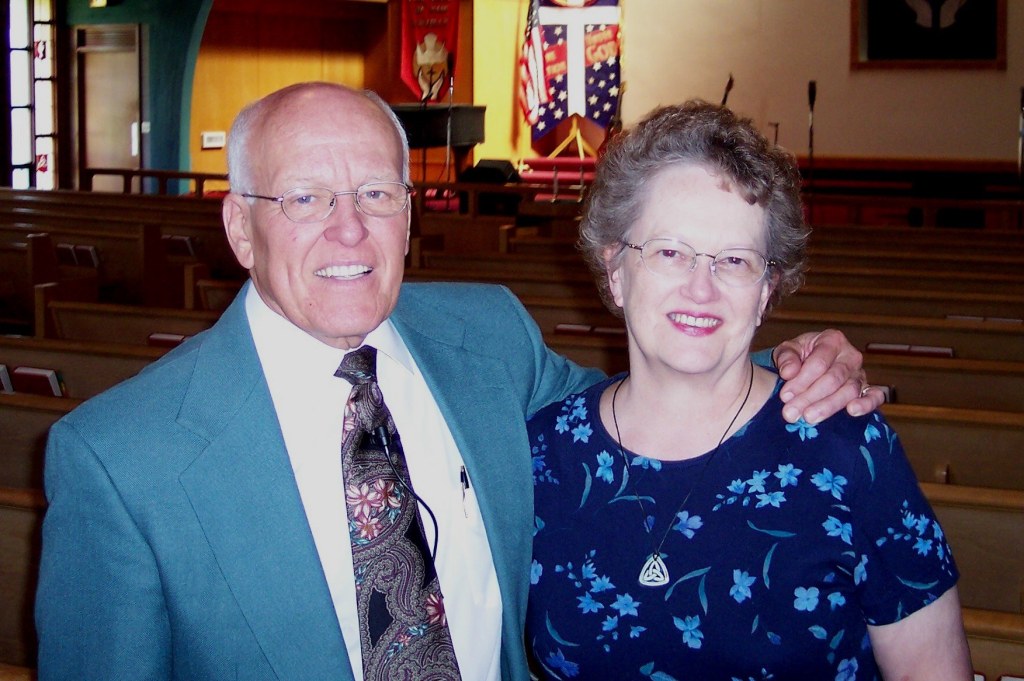
Dad worked for a steamship corporation first in Mobile, AL, then for nine years in New Orleans, LA, before our family returned to Mobile. In New Orleans we attended Carrollton Ave. United Methodist Church, and that’s where I met Bill, later to become his wife after I graduated from Murphy High School in Mobile and he graduated from Tulane University in New Orleans. Our wedding ceremony, August of 1957 in Mobile, had Bill’s Uncle Bud come from Mississippi to officiate. That will be 66 years ago this August.

Uncle Bud found Bill a supply pastorate in North Biloxi, MS, and that’s where we began our marriage, the very next Sunday after our wedding. The parsonage behind the church was furnished and Bill had a small study where he added a small bookcase assembled by his dad. We still have that bookcase. Bill also secured a teaching job at D’Iberville High School when the principal phoned Bill to ask if he could teach Math. He declined, saying he would be suited better to teach English. The school hired him. For two years Bill preached twice on Sundays, led Bible study on Wednesdays, and taught English on weekdays. Those students have kept in touch with us until this day. For their senior year, Bill and I, along with another couple, led the students on a trip to Monterey, Mexico. Quite an adventure filling us all with lasting memories.

Bill accepted his next appointment in Lucedale, MS, for a four-point charge. That’s four churches in a not-so-distant area. Bill set up a new schedule to preach every Sunday at each church, satisfying their need for consistency and our need to know the parishioners better. After two years there and our second son on the way, Bill applied for ministerial training at Asbury Theological Seminary in Wilmore, KY. Bill got church appointments which provided our family with housing. After two degrees from ATS and two more children, we moved to Indiana and another church assignment while Bill attended Hebrew Union College in Cincinnati. That meant Bill traveling on weekends to fulfill pastoral duties and connecting with family.

Back to Kentucky when called to be a substitute for a professor at ATS on sabbatical. Two years later, Bill with family moved across the street to Asbury College to teach and finish his PhD dissertation from HUC. Not going into details, we later moved to Greenwood, IN, to take staff positions for two years at One Mission Society. Then back to Asbury College when Bill was appointed Vice President of Academic Affairs.

Several years later we moved again to Indiana when Bill accepted a senior pastor position at World Gospel Church in Terre Haute, IN. After 19 years, Bill retired and we stayed on for nine years in a house we had built on 12 acres. During our time there I held a staff position at the local Crisis Pregnancy Center. In 2010 Bill contracted Legionnaire’s disease that accelerated dementia, later being diagnosed with Alzheimer’s disease.

Southport Presbyterian Church, Indianapolis, Indiana

In July of 2017 we decided to move to Indianapolis to live with our daughter, Becky, a nurse, and her husband Paul. Each family sold homes and bought a house together. That’s where we are now with our “East Wing” apartment. We attend Southport Presbyterian Church where Paul is youth director. While we miss friends in former pastorates, we are satisfied with our move, adjusting to life with changes as we age and deal with Bill’s dementia. It’s “new every day.”

From Alabama and Louisiana to Mississippi, with long stops in Kentucky, we have settled in Indiana. From our roots in Wesleyan theology and membership still with the United Methodist Church, we attend a Presbyterian church with good gospel preaching. One former pastor of SPC often teases us by saying, “They let Methodists come here.” I tell him, “Yes, it’s because of you.” Through all these times God has been good to us.

This topic was inspired by a blog post I read from a writer friend Anna Holloway

Sunday Gleanings

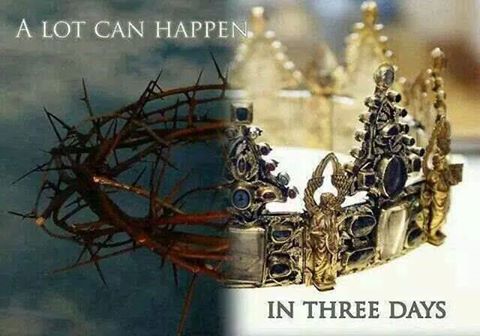
The first song in the worship service Sunday morning had a line that captivated my thoughts. I’m not quoting, for this was a new song to me. But the lines spoke of Jesus’ tomb being borrowed for three days. I wonder how Joseph of Arimathea reacted when he found out that Jesus had risen from the dead and his tomb was empty. Joseph, “a righteous man,” had made preparations to place Jesus’ body in a “new tomb,” perhaps Joseph’s own tomb. This was done “late Friday afternoon . . . as the Sabbath was about to begin” (Luke 24:50–54). The tomb indicated a gift to be used forever. Jesus was dead. We do not think of tombs being borrowed and for only three days. It made connection with the sign Jesus gave them of Jonah being in “the belly of the great fish for three days and three nights” (Matthew 12:39).

Pastor Glen’s sermon centered on forgiveness, using Matthew 18:7–22, and it includes instruction on reconciliation that can be useful in church policies. As Pastor Glen gave possible illustrations, I thought of situations which had happened in our former churches and work places. Some turned out well and others didn’t. But we did apply God’s grace to forgive.

Not included in the sermon, but what gave me pause to consider, happened to be the emphasis Jesus gave about “little ones,” repeated in verses 4–6, and 10. I’m reminded of the recent film we saw: The Sound of Freedom, about children sold in sex trafficking. This movie heightened awareness of this evil in our world and in our own nation. I recommend it highly.

Pastor Glen also taught Sunday school with the Scripture on Luke 4:16-30 where Jesus read from the scroll of Isaiah. “The Spirit of the Lord is upon me, for he has anointed me” (v. 18). The passage emphasizes the fact that Jesus’ custom was to go to the synagogue on the Sabbath. Today we would say he was a regular church attendant. That’s another lesson for us. I’m thankful that even though we got started an hour late yesterday, we made it to both Sunday school and worship service.

Mission Accomplished

When I served as a client service director at the Crisis Pregnancy Center in Terre Haute, I led the volunteer training sessions. One invited guest came from an adoption agency and she stated their mission and gave examples for how they carried it out. After she left, a prospective volunteer objected to how that agency operated, for she thought it was not appropriate. I asked the volunteer if the agency followed its mission statement. She agreed. Then we cannot fault the agency for adhering to their objective. They simply followed their agency’s plan and purpose, and we cannot judge them according to our preference.

I connect that exchange about a mission statement with two books I’ve recently read on writing. I almost quit reading them because of my beliefs, or I could say my prejudice. One author is a Buddhist and the other is a lesbian. I judged these authors by my standards, even though I firmly believe I’m right according to biblical principles. I would have missed some good teaching if I had stopped reading. I had to put aside my judgmental attitude in order to learn, although I’ve not forsaken what’s right and biblical.

This attitude I can also apply to how I view people––the way they dress or present themselves in public. For example, I have to be careful how I scrutinize those who lead worship. Their service is not a performance but an act of worship, and my part is included. One particular Sunday morning at church, four ladies led us in singing. I share honestly my first reaction as I viewed the platform: We have a fashion show displayed, for each lady wore a different outfit. Some I thought inappropriate, and that’s where my judgmental attitude showed up. I changed my focus and my act of worship improved. The songs had beautiful meaning, so I vowed to concentrate on worship, not performers.

Reading the book, Jesus Revolution, has helped judge my attitudes, especially in regard to preferences. You might have seen the movie. Both media tell the story of God’s power in bringing revival to young and old, educated and not so, those with traditional values and others who didn’t quite fit in. This spiritual awakening happened in the 1960s and 1970s and gave hope for generations to follow.

Thus my prejudice regarding how we worship has been brought under conviction by the Holy Spirit. I still have my preferences. Yet I’m still learning––mission not yet accomplished––to respect people and not judge their preferences. This application may take a while, but my goal is to be obedient to God and His teaching. Perhaps you would like to share your experience with me. For I suspect I’m not alone in this learning process.

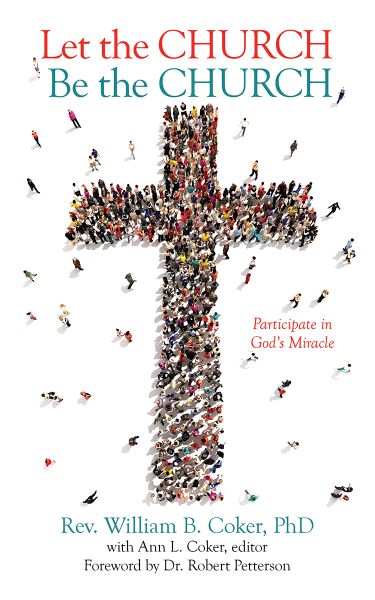
Foreword by Dr. Robert Petterson for

Tsunamis of change are crashing in upon us, smashing foundational truths, values, and institutions to smithereens. Views and behaviors considered abnormal five to ten years ago are the new normal today. Most distressingly, we are rapidly losing the next generations to the Faith that sustained and nurtured those who came before us.

The dizzying changes in our digital age begs a question asked by King David three thousand years ago: “When the foundations are being destroyed, what can the righteous do?” (Psalm 11:3). The easy answer is to point our fingers at cultural forces and influencers attacking and dismantling those things Christians hold dear, or to become warriors in the culture battles that rip our families, churches, and world apart.  

I believe Dr. William Coker has better answers grounded in the unshakable truths of Scripture, and yet more relevant than tomorrow’s headlines. Solutions to shoring up the foundations won’t be found in the White House, courthouse, schoolhouse, movie house, statehouse, or houses of Congress. They are found in the church house, your house, and my house. Dr. Coker comes right to the point in the title of his book: Let the Church Be the Church

If the light goes out in the churches, or those who belong to them, the darkness in our world will become that of outer hell. In his much-needed book, Dr Coker gets us back to basics that have long been forgotten in the churches’ mad rush to fill pews and coffers by appealing to the spirit of our postmodern culture. He cuts to the chase by taking us back to the New Testament Church that transformed the pagan Greco-Roman world. The author shows us how it can happen yet again, if we return to the basics he shares from the Scriptures. 

Dr. Coker answers King David’s question. When the foundations are being destroyed, only the righteous can do something about it. That’s why I count it a profound privilege, and even an imperative, to recommend his important book.  William Coker’s messages are born of a pastor’s compassionate heart, a theologian’s keen eye, and a culture influencer’s relevance to today’s issues. Reading his powerful sermons has caused me to reevaluate my own priorities and methodologies as a Christian leader. I think Dr. Coker’s messages will change your life, as well as those you touch. Read it, wrestle afresh with its transforming truths, and then buy it as a gift for your family, friends, and especially your pastor.  

Only when we return to foundational biblical principles, so wonderfully laid out by Dr. William Coker, can we ever restore the foundations of our families, churches, and communities.

~ Dr. Robert Petterson, Founder and President of Legacy Imperative, Inc.

Memorial Day 2023

I wonder if I have enough to write on this Memorial Day, enough creative words to honor this special holiday when we memorialize and salute those who gave the ultimate sacrifice for us and our country. Since I don’t have any family member who died in miliary service, it seems inappropriate for me to use this blog space for Memorial Day. But I write because of its importance.

I start with Scripture “There is no greater love than to lay down one’s life for one’s friends” (John 15:13, NLT). This, of course, applies directly to the sacrifice Jesus made for us all, as He gave His life that we may have eternal life. It also applies, without question, to any person who sacrifices his or her life for another. It’s the ultimate sacrifice. In the film Saints and Soldiers a closing scene showed a young soldier/missionary die from enemy fire so that two of his buddies might reach the miliary station where an English soldier gave his translation of a coded crucial message with the potential to save many.

Memorial Day is not about all soldiers, and any miliary person will agree. Many have survived the wars and with traumatic injuries to their limbs and minds. Sacrifice, yes, but they still have life, even though with wounds. And we are grateful for their sacrificial service. This day is to remember those who died in battle, and to honor their families. It’s for those who came back in coffins and those whose bodies could not be transported home or could not even be found.

I close with a link to this Memorial Day tribute made by President Ronald Reagan:

https://www.godtube.com/watch/?v=1J22M1NU&recip=521938269&aps=21a80b3afd601326b81d8e04ad8883bf5289c7424a2c7f00eaed3238ea16534c&lctg=521938269

“Your Choices Affect Others”

Above my desk is an art piece created by my friend Diane Prentice. It’s about choices and their direct affect on others. That tied in this morning with what I saw on the Bible app on my phone. Every morning I click on this app to hear someone read a daily Bible verse. Afterward three choices appear for a selection. Usually it’s easy for me to select one. This morning I could not choose one, for all three need my attention, and they connect with my husband.

  1. “I can ask God to help me see people the way He sees them.”
  2. “I can encourage people around me.”
  3. “I can take care of someone going through a difficult time.”

First, I need help in seeing Bill as God sees him. The hardest distinction for me is to react to the disease of dementia and not to Bill, a person made in God’s image.

Second, Bill needs encouragement on a daily basis. He finds it hard to express himself in a slipping-away vocabulary. Family members, especially his wife, can replace his uncertainty with encouragement, words that affirm him. It’s too easy to mock him, expressing impatience. But helping with affirmation is the positive reaction. Just this morning he couldn’t find his wallet and handkerchief he keeps in the back pockets of his jeans. Not that he’ll need them; it’s just a habit left over from daily leaving the house for work. Bill did not say “wallet” but patted his back pockets and looked absentmindedly. So I got the point, did not dismiss it, and we headed to the bedroom where the search ended with finding the lost in a pair of jeans in the dirty clothes hamper. Bill’s face reflected delight.

Third, and a twist on our relationship with caregiving. Usually when talking about our situation, the word “difficult” is used by friends, but they refer to my job as caregiver. This choice on the Bible app reversed the emphasis to the one being cared for. Yes, Bill is the one “going through a difficult time.” And it’s time for me to apply that properly. Seeing my husband as the “victim,” so to speak, will turn my attention to him and not keep it for myself. It’s caregiving at its best.

Making the choice for all three options will affect others, especially Bill.

Faith, Mighty Faith

[Before his retirement in 2008, Bill wrote the following for the World Gospel Church newsletter. I found this missel among sermon notes collected in a small box. I believe the message is worth retelling, and reflect now after 15 years the what, when, and where we did not know then. ~AC]

One of Charles Wesley’s forgotten hymns has a stanza that should be learned by every Christian: Faith, mighty faith, the promise sees, / And looks to that alone; / Laughs at impossibilities, / And cries, It shall be done! The reason why I find Wesley’s verse so important is not only because of the essential role of faith in our Christian life, but as Harry Emerson Fosdick points out in his devotional book, The Meaning of Faith, faith is inevitable in every person’s life: Man cannot live without faith because he exists in a universe the complete explanation of which is forever beyond  his grasp, so that whatever he thinks about the total meaning of creation is fundamentally faith. In other words, as Fosdick points out, The question is not whether or not we shall live by faith. The question is rather – By what faith shall we live?

Both for the religious and the non-religious, this brings faith off the sidelines of life and puts it in the middle of the playing field. At the same time, it forces us to realize that faith is not about good feelings or vacuous “believe-ism,” but it is rational and the result of honest and deliberate thought, else it falls into the category of what used to be part of our erstwhile childhood games: “let’s pretend.”

To quote Fosdick again: A man can no more avoid looking ahead when he lives his life than he can when driving his car. In both, his direction is determined by his thought about what lies ahead. But since no one knows for sure what lies ahead, faith comes into practice. Obviously, no rational person plays “let’s pretend” when traveling I-70, unless life is left in the hands of chance.

For Christians, who have every reason to believe that creation is exactly what the word means and is not unplanned happenstance, faith is trust in a Creator who continues to be involved in His creation and in His good will for His creation. In fact, the Creator has revealed Himself and His purpose not only in His creation but also in His revelation of Himself to those whom He also created in His image.

As Christians, the inevitable faith by which we face the unknown circumstances that lie before us is that God is the Creator who has made us for His purposes, and that He who made us loves what He has made and has in His good will put eternity in our hearts. With Charles Wesley we too can sing, Faith…the promise sees, / looks to that alone / disregards what seems impossible / and declare that is shall be done.

As I approach my retirement as pastor of WGC, it is this truth that rings in my heart. The road that stretches before me is unknown to me, but not to Him who has made me, called me, and blessed me beyond my wildest dreams. He knows every curve in the road and every danger; He knows where the potholes are and on which side I need to be driving; and He knows every what and when and where that I cannot see. And knowing His promises, that the best is yet to be, the last for which the first was made (you really didn’t think I could resist quoting Browning, did you?), I can say it shall be done.

But so much of my present thought also lies with this church to which God so graciously led me 19 years ago. As I have seen the Search Committee being formed and sat in with the Elders as they discussed their plans for finding the next Senior Pastor, I am confident that faith, mighty faith, can see the promise and be certain that with God’s leading, the right pastor will lead this congregation. That said, it must also be realized that the prayers of the entire congregation are a vital part of the process, because, without prayer, God’s leading will not be clearly seen.

W.E. Orchard, concludes one of his beautiful prayers with this statement: By faith we follow after Thee, through love we find the way, in hope we bring ourselves to Thee. To which we all can say: Amen.  ~Pastor Bill (2008)

Books and Shelves

Latest bookcase and still not enough room.

Books are in our lifeblood. As children we loved books, and now we still add more books to the limited amount of shelves we have.

When we moved from our home in Terre Haute to buy a home with our daughter and her husband in Indianapolis, we had to make decisions about what to disperse, get rid of, and bring with us to the East Wing apartment of our new home. The hardest decision made involved the books in Bill’s library. We knew he would not read them again, but this had been his life. He spent lots of money on books as they compiled his research library. I recall one person asking if he had read all those books. His reply: “I’ve read some of them twice.” True, but a partial to the actual answer that he had not read them all.

So before our move, we gave books first to our son Bill, Jr., a Nazarene pastor, who could best use his dad’s books. Then pastor friends, along with a few homeschool moms, chose some books. What and who next would benefit? Other family members and friends. Now down to the hardest distribution: what was left.

Our son John helped me make other distribution decisions as we packed. When he would ask about an item, I would give its history and who gave it to us. John then asked: Can you give me an answer in less than 24 words? All he truly wanted was a yes or no as to whether or not I had to keep it. The books and their value, again as I said, made decisions harder. The last distribution went to Salvation Army and Good Will. Oh, I still get a lump in my throat as I think of it.

Why? Because books, as I said, were in our lifeblood. Bill’s books especially were his life. And what became evident later is that when I started compiling and editing Bill’s sermons for publication, I wanted some of those books back. I could not ask Bill about a reference, and I knew his books would help. But we no longer possess them. I did rely on Bill, Jr. to look up some references, and I went to the library for others. But the original reference – Bill’s books and his remembrance – are no longer available.

This is not a sob story, but only facing facts. The lack of bookcases won’t stop me from buying books, even if I don’t have space to shelve more.

Ambiguous Loss

Bill likes to “go somewhere,” and we have taken short trips to Southeast Park not far from our house. I went up on the path while he stayed behind to ponder.

In the latest book I’ve read on dementia, Loving Someone Who Has Dementia, the author Pauline Boss, PhD, introduced her readers to a term she coined to describe dementia: “ambiguous loss.” Its meaning captures the essence of how caregivers think about their loved ones with dementia. That person is here but not here, present but absent. What’s gone is the psychological person and what’s left is the physical person. The loved one is still real but something is missing. What we knew as a whole person with personality, talents, educational traits, and abilities is no longer here. Logic and understanding are gone along with issues related to health and stability.

As a wife and caregiver, I embrace Boss’s term of ambiguous loss. Bill is still the man I love but not the man I’d known for over 60 years. The last six years of our marriage have challenged me to accept Bill as who he is now, what I’ve been given. And that gift, my husband Bill, is from the Lord, both then and now. I’m thankful that God has trusted me to care – in ways that I had not planned nor wanted. It’s not like I have a new husband, like a second marriage. It’s more like I’m getting to know the man I married in a new and changing-every-day way.

I’m also getting to know myself in a deeper and more insightful way. It’s how I respond and react to Bill that turns the corner on who I truly am inside. That’s the thrust of the memoir I’m slowly writing – what Bill’s dementia has taught me about myself. Most of this is because I am  learning to react to the disease and not to Bill. He is not to blame for his dementia. He did not ask for it, and nothing he did caused it. The dementia, the disease, is the culprit.

Alongside ambiguous loss is a related grief. For when we lose someone by death, we grieve, and people accept that as normal. But with a loved one’s dementia, the losses come gradually, and we want to move on. Closure, however, is a myth. We must grieve each loss while we wait for another. We must accept grief now as well as later. And that is a natural process.

If all this sounds negative, it is not. The positive outlook is hopeful. Grace is given daily and hope is around the corner for us who believe in eternal life. So I end with: Praise Jesus.

Be Ready for an Invite

I accepted an invitation to be a guest on the Jack and John podcast. Oh my, I didn’t expect that, even though I asked for it. I couldn’t refuse this from a fellow writer friend, John Walker, head of our local writers group. I had sent John my request to be a guest, and surprise: he wrote back with an invite.

It all started with a mentoring session with Chad Allen, CEO of BookCamp. Chad answered my question about how differently to market Bill’s books –– now that they have been in print for one to three years. Chad suggested I could be a guest on a podcast. I resisted that option. But he asked if I knew someone who has a podcast. Well yes, the Jack and John podcast: Adventures in Faith. We left it at that.

Why I hesitated? Two reasons and both have to do with voice. I used to speak in public and lead Bible studies, but that’s in the past. Also, my voice is now weak.

So I thought the least I could do is send an email to John and ask. He would probably not take me up on the offer and I’d be off the hook. But his reply was not only positive, he said it was “great” and gave me some dates to consider. I chose one, and found out I would have to go to Mooresville for the recording session. I don’t drive on Interstates anymore, and Becky and Paul would be out of town on that date. Perhaps that was my way out. But I asked a couple in our Sunday school class, Glenn and Pam, and they agreed. After I told them to let me know if anything else comes up, Pam said it would be on their calendar and nothing would prevent them from driving Bill and me to the podcast recording. Okay, here we go.

Getting ready began with forming questions for John and Jack to ask me. The object of the guest appearance dealt with promoting Bill’s books and podcast. So I wrote questions about how the process of publication took place and then introduced the four books. I sent the questions to John, and he replied this would be a “template” ­­–– meaning they would add their own. Uh oh.

When Glenn, Bill, and I arrived at the church for the recording, I found out it would also be available on YouTube. Visual was not what I expected, but my outfit was appropriate. Their added questions centered mostly on my caregiving and our conversion experiences. At least I could connect listeners with my memoir as a caregiver, and the testimonies for both Bill and me did not throw me off. I had heard Bill tell his conversion experience many times –– that God called him to preach before he was saved at Indian Springs Campmeeting.

Preparation helped me feel comfortable with my answers and their questions. After listening to the recording, I had only one complaint. The tone of my voice is a monotone. No spark. In case you want to hear the podcast, it will be released on Saturday 15 April at 9 AM. How you get there is to open any server for podcasts and look for the podcast Jack and John: Adventures in Faith.

I close with a quote from Todd Henry in his book Daily Creative. “Put yourself in situations where you are a little nervous about your ability to perform…. Without challenge, you will begin to feel stuck.” So I said yes to being a guest on a podcast.